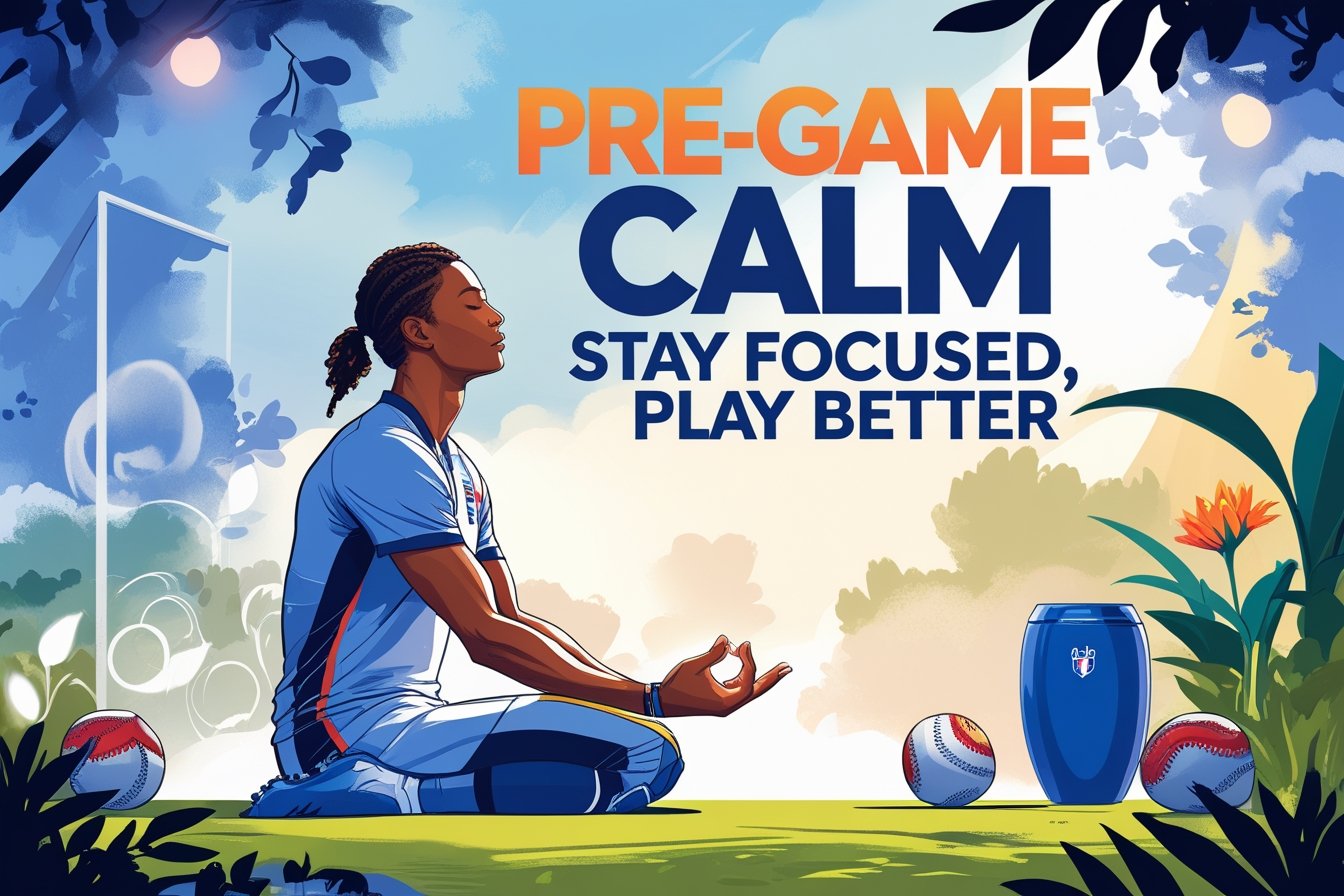
Ever feel your heart pound like a drum before a big game? Maybe your mind races, jumping from one worry to the next. That kind of pre-game jitters can mess with your play. You might miss easy shots, make bad choices, or feel slower than usual. The good news is, there’s a way to beat this. Achieving pre-game calm helps you sharpen your focus, make smarter decisions, and execute plays flawlessly. This article will show you practical ways to calm your mind and body, getting you ready to shine on the field.
Understanding the Science of Pre-Game Performance:
The Physiological Impact of Nerves:
When you feel nervous, your body shifts into “fight-or-flight” mode. This means your heart rate speeds up, adrenaline floods your system, and your muscles get tense. A little bit of this can give you a helpful burst of energy. However, too much can make you shaky, unable to think clearly, or even freeze up. Sports psychologists and neuroscientists often point out how these stress hormones can really hurt athletic performance.
Cognitive Load and Decision Making:
Anxiety and feeling distracted put a heavy “cognitive load” on your brain. It becomes much harder to process information quickly and make accurate decisions. When your mind is cluttered with worries, you often make errors in judgment. You might miss chances or react slower than you should. Studies show a clear link between high anxiety levels and a drop in performance across many sports.
Strategies for Cultivating Pre-Game Calm:
Mindset and Mental Rehearsal:
Getting ready in your head is just as vital as getting ready physically. Think of it as preparing your mind for battle, not just reacting to what comes.
Visualization Techniques:
Picture yourself playing your best game. See every pass, every shot, every move working perfectly. Guide your mind to visualize success, executing plays flawlessly, and overcoming any challenges. You can create a “mental movie” of your ideal game performance, seeing yourself dominate from start to finish.
Positive Self-Talk:
The words you tell yourself have great power. Trade negative thoughts for positive ones. Instead of “Don’t mess up,” try “I am ready.” Affirmations like “I can do this” or “I am strong” help build confidence. Use phrases that remind you of your skills and readiness.
Mindfulness and Breathing Exercises:
Simple breathing exercises can calm you down fast. Try the 4-7-8 breathing technique: breathe in for 4 counts, hold for 7, and breathe out slowly for 8. Or try box breathing, where you inhale, hold, exhale, and hold for four counts each. These methods bring your focus back to your body and away from worries.
Physical Preparation for Mental Readiness:
Your body’s readiness plays a big part in your mental state. A prepared body means a calmer mind.
Dynamic Warm-ups:
A good warm-up does more than just prepare your muscles. It also tells your brain it’s time to switch into game mode. Feeling physically ready and in control helps calm any pre-game jitters. It builds a sense of confidence and readiness within you.
Pre-Game Routine Consistency:
Having a consistent pre-game routine helps lower uncertainty. It gives you a familiar path to follow, reducing anxiety. Famous athletes, like LeBron James, are known for their strict pre-game rituals. Create your own consistent routine, including what you eat, how you hydrate, and even what music you listen to.
Environmental and Social Factors:
Your surroundings and the people around you can greatly affect your mental state. Pay attention to these elements.
Managing Distractions:
Crowd noise, opponent antics, or even your own internal doubts can be distracting. Learn to tune them out. Use headphones with calming music to block out noise. Focus on a specific visual cue, like the laces on your shoes, to bring your mind back to the present moment.
Team Cohesion and Support:
A strong team feeling offers a sense of security. It reduces individual pressure. Teammates and coaches play a big role in creating a positive and supportive pre-game environment. Knowing your team has your back can make a huge difference in your pre-game calm.
Overcoming Pre-Game Anxiety Triggers:
Identifying Personal Triggers:
Understanding what makes you anxious is the first step to feeling calm. Think about what specifically causes your nerves to jump. Common triggers include fear of failure, pressure to perform well, or remembering past negative experiences. Try journaling or reflecting after games to spot your personal anxiety triggers.
Developing Coping Mechanisms:
Once you know your triggers, you can build a toolkit of strategies. These strategies should be ready for your specific needs. The breathing methods, visualization, and positive self-talk we talked about are all great for specific trigger situations. Sports psychologists often say that adapting your coping strategies to your unique challenges makes them more powerful.
Integrating Pre-Game Calm into Your Training:
Practice as Preparation:
Think of pre-game calm as a skill, just like shooting or dribbling. It needs to be practiced. Start adding elements of your pre-game routine and mental strategies into your regular training sessions. Try simulating pre-game conditions during practices to get used to managing nerves when it counts.
Post-Game Reflection for Future Improvement:
Learning from each game is super important. After a game, take time to think about your pre-game preparation. What worked well? What didn’t? Review your game-day routines and how you felt mentally. This helps you refine your approach for the next competition.
Conclusion:
Achieving pre-game calm isn’t a secret, but a skill you can learn. By focusing on your mindset, getting your body ready, and managing your environment, you gain an edge. Remember, things like visualization, positive self-talk, and consistent routines build your mental strength. Practice these techniques regularly. You’ll see better focus, more confidence, and ultimately, much better performance on the field. Pick one or two strategies from this guide and start using them today.
FAQs:
1. Why do I feel nervous before a game?
Pre-game nerves are caused by your body’s “fight-or-flight” response—your heart rate rises, adrenaline kicks in, and muscles tense up to prepare for action.
2. Can anxiety really affect my game performance?
Yes. High anxiety adds mental pressure, makes decision-making harder, and reduces reaction time, which can hurt your overall performance.
3. How can I calm my nerves before a match?
Use techniques like deep breathing (e.g., 4-7-8 method), visualization, and positive self-talk to relax your body and focus your mind.
4. What’s the benefit of a pre-game routine?
A consistent routine lowers uncertainty, builds confidence, and helps you mentally and physically prepare the same way every time.
5. How can teammates help with pre-game calm?
Supportive teammates reduce pressure and boost confidence. A strong team bond makes you feel more secure and ready to play.
6. Should I practice mental calm during regular training?
Yes. Include mental strategies like breathing, focus drills, and routine building in practice so you’re prepared on game day.
