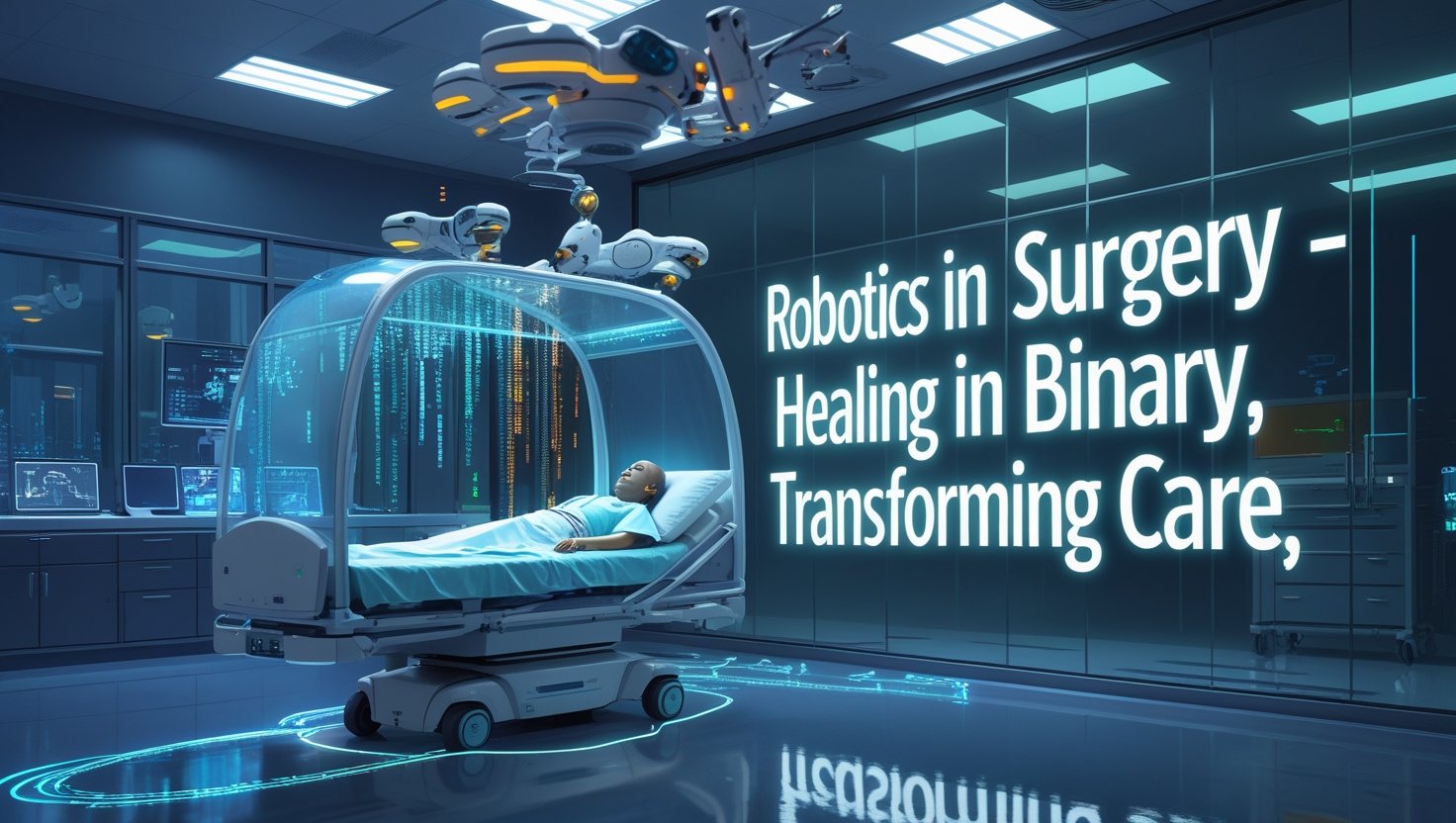
Imagine a world where surgical mistakes are a thing of the past, where trembling hands are replaced by steel precision, and where patients walk home the same day they undergo complex procedures. This isn’t science fiction, it’s the reality of robotic surgery today. As digital algorithms merge with human expertise, we’re witnessing medicine’s greatest revolution since the discovery of antibiotics. Robotics in surgery is not just changing how doctors operate; it’s fundamentally reshaping what it means to heal.
How Digital Precision Rewrites Medical History:
The journey from traditional surgery to robotic-assisted procedures represents more than a technological advancement, it’s a complete paradigm shift. Where once surgeons relied solely on steady hands and years of experience, today’s operating rooms feature sophisticated machines that translate human intent into flawless execution.
Surgical robots don’t replace doctors; they amplify their capabilities exponentially. These systems eliminate natural human limitations, such as hand tremors, fatigue, and the inability to work in confined spaces. A surgeon’s movements are filtered through advanced algorithms, scaled down to microscopic precision, and executed with consistency that human hands simply cannot achieve.
The transformation extends beyond individual procedures. Robotic surgery has shortened recovery times from weeks to days, reduced scarring from inches to millimeters, and turned major operations into outpatient procedures. Patients who once faced lengthy hospital stays now return to their daily lives with minimal disruption, experiencing healing that feels almost magical in its efficiency.
Where Human Instinct Meets Machine Intelligence:
Modern surgical robotics creates a unique collaboration between human creativity and machine precision. Surgeons don’t simply operate robots, they conduct a symphony of coordinated movements, where every gesture is enhanced, refined, and perfected by sophisticated technology.
The integration goes deeper than mechanical assistance. Artificial intelligence in surgery now predicts complications before they occur, suggests optimal surgical pathways, and continuously adjusts techniques based on real-time patient data. This symbiosis between human judgment and machine learning creates outcomes that neither could achieve independently.
Robotic surgical systems process thousands of data points simultaneously, monitoring everything from tissue density to blood flow patterns. They can detect subtle changes that might escape human attention, alerting surgeons to potential issues before they become critical. This predictive capability transforms surgery from reactive intervention to proactive optimization.
The learning curve for these systems is remarkable. Each procedure teaches the AI algorithms new patterns, building a collective knowledge base that benefits every future patient. What surgeons learn over decades of practice, these systems can now absorb and apply across thousands of procedures in mere months.
When Geography Becomes Irrelevant:
One of the most revolutionary aspects of robotic surgery is its ability to transcend physical boundaries. Telesurgery and remote robotic procedures are making world-class surgical expertise available regardless of location, democratizing access to specialized medical care in unprecedented ways.
Rural hospitals can now offer complex procedures that previously required travel to major medical centers. A cardiac surgeon in New York can operate on a patient in rural Montana, with robotic systems serving as the bridge between expertise and need. This geographic liberation is particularly transformative for emergency situations where time is critical and travel is impossible.
The implications extend globally. International surgical collaboration through robotics is bringing advanced medical care to underserved regions, where local surgeons can receive real-time guidance from experts thousands of miles away. This knowledge transfer is accelerating medical progress in developing nations at an unprecedented pace.
Training opportunities have also been revolutionized. Medical students can now practice on robotic simulators that provide infinitely repeatable scenarios without risk to actual patients. These systems create standardized learning environments where skills can be developed and perfected before ever entering an operating room.
The Art of Cellular-Level Healing:
Minimally invasive robotic surgery has redefined what’s possible at the cellular level. Where traditional surgery often requires large incisions and significant tissue disruption, robotic systems can work through ports smaller than a pencil, performing complex procedures with minimal collateral damage.
The precision of robotic surgical instruments allows surgeons to work between individual cells, repairing damage at the microscopic level while leaving surrounding tissue completely undisturbed. This cellular-level precision dramatically reduces inflammation, accelerates healing, and minimizes the body’s stress response to surgical intervention.
Micro-robotics is pushing these boundaries even further. Experimental systems can now navigate through blood vessels, delivering targeted treatments directly to specific organs or tissues. These microscopic machines promise to make surgery so precise that the line between treatment and natural healing becomes virtually indistinguishable.
The recovery experience has been transformed accordingly. Patients undergoing robotic procedures often report less pain, reduced medication requirements, and faster return to normal activities. What once required weeks of recovery now often takes just days, fundamentally changing the risk-benefit calculation for surgical interventions.
Cost-Effectiveness in the Digital Age:
While robotic surgical systems require significant initial investment, their economic impact extends far beyond equipment costs. The efficiency gains, reduced complication rates, and shortened hospital stays create substantial long-term savings for healthcare systems worldwide.
Robotic surgery economics reveals interesting patterns. Though individual procedures may cost more initially, the reduction in complications, readmissions, and extended recovery periods often results in net savings. Patients return to work faster, reducing societal costs and improving quality of life metrics.
Insurance coverage for robotic procedures has evolved rapidly as outcomes data demonstrate clear benefits. Many procedures that were once considered experimental are now standard covered treatments, reflecting the technology’s proven value in improving patient outcomes while controlling costs.
The democratization of surgical expertise through robotics also creates economic opportunities. Smaller hospitals can offer advanced procedures without maintaining large specialized departments, creating new revenue streams while serving their communities more effectively.
Glimpsing the Future of Healing:
The next generation of surgical robotics promises even more dramatic transformations. Autonomous surgical robots are being developed that can perform certain procedures independently, with human oversight but minimal direct control. These systems could eventually provide surgical care in locations where human surgeons simply aren’t available.
Nanotechnology integration will soon allow robots to work at the molecular level, potentially repairing genetic defects, removing cancer cells one at a time, or rebuilding damaged tissues atom by atom. This convergence of robotics and nanotechnology could make many current medical challenges entirely obsolete.
Predictive surgical planning using AI will soon allow complete virtual rehearsals of procedures before they occur. Surgeons will be able to practice on exact digital replicas of patients, optimizing techniques and predicting complications with unprecedented accuracy.
The integration of regenerative medicine with robotics opens possibilities for procedures that not only repair damage but actively rebuild and improve upon original biological structures. This combination could extend human lifespan and quality of life in ways currently unimaginable.
Conclusion:
Robotics in surgery represents more than technological advancement, it’s a fundamental reimagining of healing itself. As binary code joins with human compassion, we’re witnessing the emergence of medical care that’s more precise, accessible, and effective than ever before. The future of surgery isn’t just about robots performing operations; it’s about creating a world where perfect healing becomes the standard rather than the exception.
FAQs:
Q1: Is robotic surgery safer than traditional surgery?
Yes, robotic surgery typically offers enhanced safety through improved precision, reduced human error, and better visualization. Studies consistently show lower complication rates and faster recovery times compared to traditional open surgery methods.
Q2: How much does robotic surgery cost compared to conventional procedures?
While robotic surgical procedures may have higher upfront costs, they often result in overall savings through shorter hospital stays, fewer complications, and faster recovery. Most insurance plans now cover FDA-approved robotic procedures.
Q3: Can robotic systems operate independently without human surgeons?
No, current surgical robots require skilled human surgeons to control them. The robots enhance human capabilities but don’t replace the surgeon’s expertise, decision-making, and real-time problem-solving abilities.
Q4: What types of surgeries can be performed robotically?
Robotic surgery is available for numerous procedures, including cardiac surgery, urological procedures, gynecological operations, orthopedic surgeries, and many cancer treatments. The range continues expanding as technology advances.
Q5: How long does it take surgeons to learn robotic surgical techniques?
Most surgeons require 15-25 robotic procedures to achieve basic proficiency, with advanced expertise developing over 50-100 cases. Robotic surgery training programs typically span several months of intensive practice and certification.
Q6: Are there any risks specific to robotic surgery?
Robotic surgical risks are generally lower than traditional surgery, but can include technical malfunctions, longer procedure times during learning phases, and the need for conversion to open surgery in rare cases. Proper training and system maintenance minimize these risks significantly.
