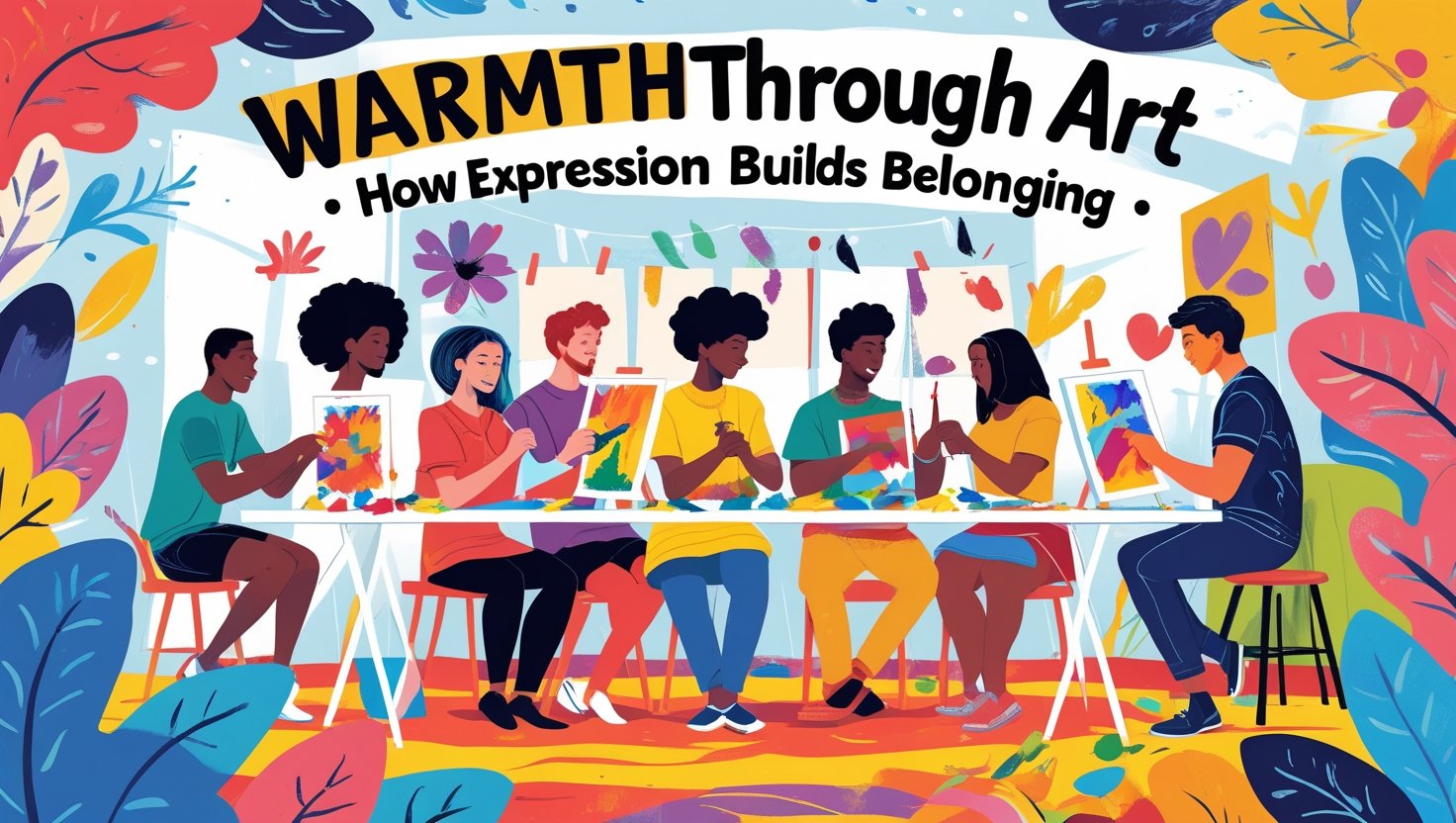
Picture the moment when a stranger’s painting moves you to tears, or when a child’s crayon drawing bridges the gap between generations, this is warmth through art in its purest form. How expression builds belonging isn’t just about creating beautiful objects; it’s about weaving invisible threads that connect human hearts across all boundaries.
The Invisible Architecture of Human Connection:
Warmth through art operates on frequencies that bypass our logical minds and speak directly to our souls. When we witness authentic artistic expression, something profound happens within us, a recognition of shared humanity that transcends language, culture, and individual experience.
Understanding how expression builds belonging requires recognizing that art functions as a universal language. Every brushstroke, every note, every movement carries emotional DNA that resonates with viewers, creating instant connections between creator and observer. This phenomenon explains why certain artworks move us so deeply, even when we can’t articulate why.
The science of mirror neurons reveals that when we observe artistic expression, our brains literally mirror the emotions and experiences of the creator. This neurological response forms the foundation of warmth through art, creating empathy and understanding that builds bridges between isolated individuals.
The Emotional Alchemy of Creative Expression:
Transforming Pain into Connection:
Warmth through art often emerges from humanity’s deepest struggles. Artists throughout history have transformed personal pain into universal messages of hope, resilience, and connection. This transformation process creates belonging by showing others that they’re not alone in their struggles.
When someone creates art from their pain, they’re essentially offering their vulnerability as a gift to the world. This act of courage invites others to share their own vulnerabilities, creating circles of connection that expand infinitely outward.
The Healing Power of Witnessed Expression:
How expression builds belonging becomes clear when we consider the therapeutic nature of being truly seen. Art provides a safe space for authentic self-expression, allowing individuals to share their inner worlds without fear of judgment or rejection.
Community art projects demonstrate this principle beautifully. When neighbors collaborate on murals, quilts, or performances, they’re not just creating art, they’re creating relationships. The shared creative process breaks down barriers and builds understanding in ways that traditional social interactions often cannot achieve.
Breaking Through Isolation Barriers:
Modern society often leaves people feeling disconnected and isolated. Warmth through art provides antidotes to this epidemic loneliness by creating spaces where genuine human connection can flourish.
Art communities, whether physical or virtual, become sanctuary spaces where people can express themselves authentically and find others who resonate with their experiences. These communities prove that belonging isn’t about fitting in, it’s about finding spaces where you can be yourself and still feel welcomed.
The Neuroscience of Artistic Connection:
Mirror Neurons and Emotional Resonance:
Recent neuroscientific research reveals the biological basis for warmth through art. Mirror neurons fire both when we act and when we observe someone else performing that same action. This mechanism explains why watching someone paint, dance, or sing can evoke powerful emotional responses in observers.
These neurological responses create the foundation for how expression builds belonging. When we witness artistic expression, our brains literally experience echoes of the creator’s emotions, fostering empathy and connection that transcends conscious thought.
The Oxytocin Effect in Creative Communities:
Participating in artistic activities triggers the release of oxytocin, often called the “bonding hormone.” This chemical response explains why group creative activities are so effective at building belonging and social cohesion.
Warmth through art becomes chemically reinforced through repeated creative interactions. Art classes, community choirs, and collaborative projects create positive feedback loops that strengthen social bonds and build lasting relationships.
Dopamine and Creative Reward Systems:
The brain’s reward system responds powerfully to creative expression, releasing dopamine that reinforces the desire to create and share. This neurochemical response explains why artistic communities tend to be so welcoming and supportive, sharing creativity literally feels good at a biological level.
Cultural Bridges Through Creative Expression:
Art as Universal Language:
Warmth through art transcends cultural boundaries in ways that spoken language cannot. A photograph, painting, or piece of music can communicate emotions and experiences that resonate across cultures, creating understanding between people who share no common language.
This universal quality of artistic expression explains how expression builds belonging in diverse communities. Art provides common ground where differences become less important than shared human experiences.
Preserving Heritage While Building Future:
Traditional art forms carry cultural DNA from generation to generation, preserving history while adapting to contemporary contexts. Warmth through art flows through these cultural streams, connecting past, present, and future in meaningful ways.
When communities engage with both traditional and contemporary art forms, they create belonging that honors heritage while embracing innovation. This dynamic balance keeps cultures alive and relevant while maintaining their essential character.
Breaking Down Prejudice Through Shared Creation:
How expression builds belonging becomes evident when art brings together people from different backgrounds. Collaborative creative projects often reveal the superficial nature of prejudice, showing participants that their shared humanity runs deeper than their differences.
These transformative experiences create lasting change in communities, breaking down barriers and building bridges that extend far beyond the original artistic project.
The Psychology of Creative Vulnerability:
Courage in Authentic Expression:
Warmth through art requires courage, the courage to be vulnerable, to share your inner world, and to risk rejection or criticism. This courage creates powerful connections because vulnerability is inherently relatable and attractive to others.
When artists share their authentic selves through their work, they permit others to do the same. This reciprocal vulnerability creates the deep connections that form the foundation of belonging.
The Safety of Symbolic Expression:
Art provides a safe way to express difficult emotions and experiences. Through metaphor, symbol, and abstraction, people can share their deepest truths without feeling completely exposed. This safety makes expression more accessible and creates opportunities for connection that might not otherwise exist.
Healing Through Witnessed Creation:
How expression builds belonging becomes therapeutic when our creative efforts are witnessed and valued by others. The experience of being truly seen and appreciated for our authentic expression can heal deep wounds and build confidence in our worth as human beings.
Digital Age Transformation of Artistic Connection:
Virtual Communities and Real Belonging:
The digital age has transformed warmth through art by creating virtual spaces where people can share their creative expressions with global audiences. Online art communities demonstrate that belonging can be built through digital connections that feel as real as physical ones.
Social media platforms, online galleries, and digital collaboration tools have democratized art sharing, making it possible for anyone to find their artistic tribe regardless of geographic location.
The Paradox of Digital Intimacy:
While digital platforms can facilitate warmth through art, they also present challenges. The intimacy of creative expression can be diluted by the medium, and the flood of digital content can make it difficult for individual expressions to be truly seen and valued.
Understanding how expression builds belonging in digital contexts requires recognizing both the opportunities and limitations of virtual artistic communities.
AI and Human Creative Connection:
As artificial intelligence increasingly creates art, the value of human creative expression becomes more important than ever. Warmth through art depends on the human element – the vulnerability, intention, and lived experience that infuses authentic artistic expression.
The rise of AI art makes human creativity more precious, not less, as people seek authentic connections with real human experiences and emotions.
Therapeutic Applications of Artistic Belonging:
Art Therapy and Community Healing:
Professional art therapy demonstrates how expression builds belonging in therapeutic contexts. Group art therapy sessions create safe spaces where people can share their experiences and find others who understand their struggles.
The non-verbal nature of artistic expression makes it particularly powerful for processing trauma and building connections with others who have had similar experiences.
Intergenerational Connection Through Art:
Warmth through art bridges generational gaps by providing common ground for different age groups. Art projects that bring together children and elderly participants create mutual understanding and respect that enriches both groups.
These intergenerational connections demonstrate that belonging can transcend age differences when facilitated through shared creative experiences.
Cultural Healing Through Creative Expression:
Communities that have experienced trauma, displacement, or cultural disruption often use art as a healing tool. Warmth through art provides a way to process collective experiences and rebuild social bonds that have been damaged or severed.
Building Inclusive Creative Spaces:
Designing for Diverse Expression:
Creating environments where warmth through art can flourish requires intentional design that welcomes diverse forms of expression. Inclusive art spaces consider accessibility, cultural sensitivity, and varying skill levels to ensure everyone can participate.
Understanding how expression builds belonging means recognizing that different people express themselves in different ways, and all forms of authentic expression deserve respect and support.
Removing Barriers to Creative Participation:
Many people believe they’re “not artistic” and exclude themselves from creative communities. Building belonging through art requires actively dismantling these barriers and creating welcoming spaces for all levels of artistic experience.
Celebrating Process Over Product:
Warmth through art is most powerful when the focus shifts from creating perfect products to celebrating the courage to express oneself authentically. This shift makes creative spaces more inclusive and builds stronger connections between participants.
The Economics of Creative Connection:
Art as Community Investment:
Communities that invest in artistic programs and spaces see returns in social cohesion, mental health, and economic development. Warmth through art creates value that extends far beyond the monetary cost of programs and facilities.
Understanding how expression builds belonging helps communities make informed decisions about allocating resources to artistic initiatives that strengthen social bonds and improve quality of life.
The Hidden Value of Creative Communities:
The economic benefits of warmth through art include reduced healthcare costs, decreased crime rates, and increased property values in areas with strong artistic communities. These benefits demonstrate that investing in creative expression pays dividends in multiple ways.
Sustainable Models for Artistic Community Building:
Successful artistic communities develop sustainable models that balance financial viability with inclusive access. Understanding how expression builds belonging helps organizations create programs that serve their communities while maintaining long-term stability.
Future Visions of Artistic Belonging:
Emerging Technologies and Human Connection:
New technologies offer exciting possibilities for warmth through art and creative community building. Virtual reality, augmented reality, and other emerging platforms could create new forms of artistic expression and connection.
However, the fundamental human need for authentic connection and belonging remains constant, regardless of technological changes. The most successful future applications will enhance rather than replace human-to-human creative connections.
Global Collaboration and Local Community:
The future of how expression builds belonging likely involves balancing global connectivity with local community building. Technology enables worldwide artistic collaboration while communities seek to maintain the intimacy and warmth of local creative connections.
Sustainable Creative Ecosystems:
Future artistic communities will need to develop sustainable models that support both individual expression and collective belonging. This requires balancing competitive and collaborative elements while maintaining the core values that make warmth through art possible.
Conclusion:
Warmth through art represents one of humanity’s most powerful tools for building belonging and healing divisions. How expression builds belonging reveals itself through every shared creative moment, every vulnerable artistic offering, and every heart that opens in response to authentic expression. In a world that often feels fragmented and isolated, art remains our most reliable pathway back to each other.
FAQs:
Q1: Can anyone experience warmth through art, even without artistic skills?
A: Yes, art appreciation and community participation build belonging regardless of personal artistic ability.
Q2: How quickly can artistic expression create feelings of belonging?
A: Many people report an immediate connection during first-time participation in welcoming creative communities.
Q3: Do digital art communities provide the same warmth as in-person groups?
A: While different, online communities can create genuine belonging through shared creative experiences.
Q4: Can art therapy help people who struggle with social connection?
A: Art therapy effectively builds social skills and connections through non-verbal expression and shared creativity.
Q5: How can communities create more inclusive artistic spaces?
A: Focus on process over product, welcome all skill levels, and actively remove barriers to participation.
Q6: What role does vulnerability play in artistic belonging?
A: Authentic vulnerability in creative expression invites others to connect and share their own authentic selves.
